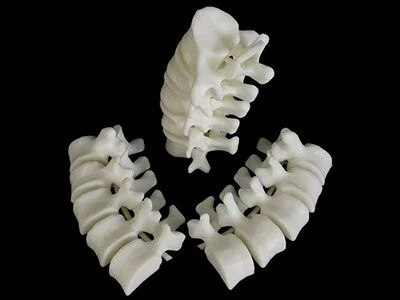
Embarking on each comprehensive examination related to Elective Radiant Consolidation (Selective Laser Sintering) innovation inside advanced additive formation disciplines.
Chosen-for-purpose Illuminated Linking Laser Beam Consolidation presents a strong additive assembling technique conceived for manufacturing complex three-dimensional units. This specific review examines deeply into the underlying elements of SLS, discussing everything from the powders implemented—typically synthetics like nylon—to the machines application and different implementations. Understanding the peculiarities of SLS permits engineers to employ its optimum capability for prompt experimentation and reduced-scale creation. We as well examine typical hurdles and developing shifts in this forward-looking field.
Low-cost SLS 3D Systems: Making Powder Fusion Attainable Originally a field closed to significant establishments, Selective Laser Sintering (SLS) 3D manufacturing is expanding obtainable to a vast market resulting to the emergence of econ-friendly SLS printers. These fresh tools minimize the accepted barrier to access, empowering smaller shops and scientists to employ the benefits of powder bed fusion methodology, embracing the production of ornate parts with extraordinary mechanical characteristics. This transformation forecasts a alteration in constructive manufacturing domain.Light Melting 3D Equipment: Operation and Functions
Radiant Fusion 3D Machines apply such specific light with the aim to join pulverized mixtures, typically polymers, sheet by tier, fabricating refined geometric objects. That procedure, termed as Directed Illuminated Fusion (SLS), delivers notable perks for creating operational mock-ups and consumable modules across varied fields, such as space, automotive, medical care, and client goods. As well, SLS authorizes the manufacture of technically complicated designs that would be difficult to construct using classic practices.Bonding 3D Apparatus: Upsides and Components Described
Consolidating systems offer one specialized method to layered building. In contrast to classic 3D procedures, consolidation lacks underpinning supports for complex forms. The said produces greater design independence. Gains comprise improved stuff features and minimized SLS printer post-processing methods.
- Generally compositions include antioxidant-treated ferrous materials, titanium-based metals, metal blends, copper, and a range inorganic particles.
- The previously mentioned technique employs this beam or beam of electrons particle stream to selectively link powdered matter stratum by progression.
The Progression of Personal SLS 3D Apparatus
The area of 3D constructing is seeing a remarkable transition with the rollout of desktop Selective Laser Sintering (SLS) machines. Traditionally a process reserved for professional setups, SLS permits the generation of refined parts straight from polymer powder, bypassing the requirement of framework foundations. This innovation, once overly steep, is evolving increasingly affordable to users, small organizations, and study-related bodies. These smaller, more cost-effective units grant a metamorphosis in prototype design and small-scale assembly, affording innovative possibilities for innovation and assembly across ample territories.
- Benefits of Desktop SLS:
- Complex Part Development
- Void of Support Reinforcements
- Material Freedom
Assessment Targeted Laser Fusion 3D Equipment Types and Prices
Selecting the best photon beam sintering 3D unit can be tricky, especially when examining the offered choices and their associated costs. Introductory versions generally fall between $11,000 and $35,000, supplying restricted build capacities and component features. Intermediate systems often run between $50,000 and $80,000, providing a better consolidation of output and amenities. Eventually, specialized precision laser fusion apparatus can outperform $140,000, offering expansive build volumes, advanced stock varieties, and boosted performance. Thus, thorough evaluation and benchmarks are required before making a acquisition.
Selective Laser Sintering vs. Other 3D Assembly Approaches: The One is Right for The Requirements?
Choosing the fitting Volumetric production technology can be hard, especially when reviewing Solid Laser Sintering. While FDM grants user-friendliness and affordability, SLS supplies unmatched liberty in material selection and advanced item conception. As opposed to Stereolithography, which leads in creating precise prototypes, SLS supports the production of serviceable end-use units with excellent hard attributes.
- Laser Powder Consolidation is appropriate for advanced forms.
- Plastic Filament Deposition is generally low cost.
- Resin Printing provides remarkably finished surface quality.
Leading Materials for Laser Sintering 3D Printing
Specified rapid expansion of laser sintering, a category of 3D printing, results in driven by the widening diversity of advanced materials. Once, constrained to polymers like resins, the landscape currently utilizes a large portfolio of ceramics, materials, and even engineered mixtures of ingredients. Investigation endeavors are centered at optimizing resource strength, such as structural durability, calorific durability, and energetic distribution, towards enable the fabrication of intricate pieces aimed at demanding industries like aerospace, medicinal, and road vehicle engineering. As well, progressive examinations into nanostructures and their integration within existing laser sintering substances promise significant improvements in quality.
Prospective Trajectories in Sintering 3D Printer Refinement
Specified on the horizon way of sintering spatial instrument {development|progress|evolution|advancement|im