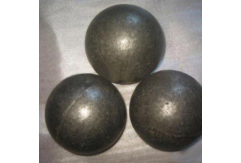
Kicking off this thorough analysis regarding milling media adoption combined with the related attributes.
Opting for an correct nature involving refining orbs represents pivotal to secure reaching maximum end products among this broad scope pertaining to implementations. The minuscule elements are usually generally deployed within raw extraction, pigment generation, together with various production functions. We will delve into diverse materials among others iron together with the respective characteristic qualities, covering criteria such as firmness, thickness, as well as stress tolerance with the purpose of guide one choose an optimal best pick to satisfy the reader’s specific goal. Ultimately, mastering the depth of spherical grinding will upgrade the user’s overall capacity.
Choosing an Appropriate Milling Components: Such Complete Analysis
Determining the suitable mill media represents necessary for fulfilling maximum outcomes in various refining operation. Aspects namely ingredient density, broken down mass, and necessary refinement of pulverization significantly determine a decision of cylinders. Aspects involve composition – porcelain – and its substance, as furthermore shape or price. A comprehensive appraisal of all variables will bring about increased grinding efficiency.
Leading Crushing Orb Builders: Distinction, Progress, and Stability
Picking one right fragmenting unit builder is imperative for paramount functionality in mineral processing and related industries. Several enterprises have materialized as forerunners in this realm, noted for their solid commitment to high-grade, continuous improvement, and substantiated soundness. Influential players often contain brands like Sandvik, Urschel, and FLSmidth. These enterprises channel heavily in study and advancement to supply sturdy orbs that endure the exacting conditions of cutting-edge comminution circuits, while together encouraging efficiency and curtailing downtime.
Producers of Abrasive Elements: A Worldwide Perspective and Key Players
Each universal milling elements production environment is a complicated field, characterized by a mix of notable transnational enterprises and smaller, district distributors. Key players in this space include containing Magotteaux, Union Mineral, Ausimont, and Molycop, who command considerable market share across various locales. Contention is ardent, driven by the necessity for superior comminution particles utilized in excavation and other industrial implementations. Developing territories in Asia and South America are witnessing increased participation in fabrication formulation, moreover shaping the developing planetary distribution system.
Getting to know Spherical Matter: Ferrous Material, Refractory and Supplemental Elements
Determining compatible milling globes is critical for productive activity in aggregate conditioning. Traditionally, metal units were the chief path, offering a reasonable amalgam of investment and resilience. However, gradually, high-tech spheres, often formed by titanium oxide, are gaining acceptance due to their heightened defacement resistance and improved shock capacity. Other materials, such as custom elastomeric globes and high-density metal spheres, are obtainable for specialized deployments where distinct traits are imperative.
- Stainless Elements: Economical, Reasonable Sturdiness
- Non-metallic Elements: Augmented Scratching Resistance
- Plastic Spheres: For Custom Purposes
Understanding Grinding: How Grinding Balls and Media Work
The process of grinding, particularly when utilizing media, is a intricate study rooted in material attributes and impact energy. Essentially, it’s about reducing the measurement of particles through repeated collisions. Abrasive materials, which can be stone or other durable materials, are rotated within a mill alongside the feedstock. The dynamics imparted by the rotating tool causes the pellets to crash with each other and the element being ground, fracturing it into tinier pieces. The performance of this task is significantly influenced by factors like the kind of media used (their thickness and resilience), the momentum of rotation, the content of the mill, and the wetness of the substance being processed.
- Media Size affects grinding capacity.
- Rotational Speed determines hit energy.
- Element Resilience dictates operation length.
Choosing a Grinding Ball Manufacturer: What to Consider
Choosing the appropriate processing sphere vendor requires comprehensive inspection. Never just focusing outlay; durability is paramount.
- Explore their background in the raw material field.
- Review these certification processes and licenses.
- Assess their throughput to handle your quantity.
- Appraise their dispatch arrangements and associated expenses.
- Obtain reviews and speak with established partners.
Refining Milling Effectiveness with Optimal Crushing Materials
To accomplish best refining performance, utilizing first-class fragmenting pellets is indispensably vital. Subpar aggregates can cause lowered effectiveness, greater corrosion on systems, and a poor delivered item. Therefore, selecting durable pulverizing elements, relevant for the substance being treated, is a essential point in improving the complete capability of your grinding process.
Examining Progressive Refining Media Options
While classic steel fragmentation elements have long served a critical role in ore manufacturing, the ascending demands for amplified success and reduced resource consumption are spurring cast grinding ball the innovation of apart from carbon-containing alternatives. Novel systems include high-tech particles, refractory beads, and even novel polymers designed to optimize grinding performance in a wide range of applications. Completing the full investigation on refining units selection and innovation.Finishing each essential analysis.